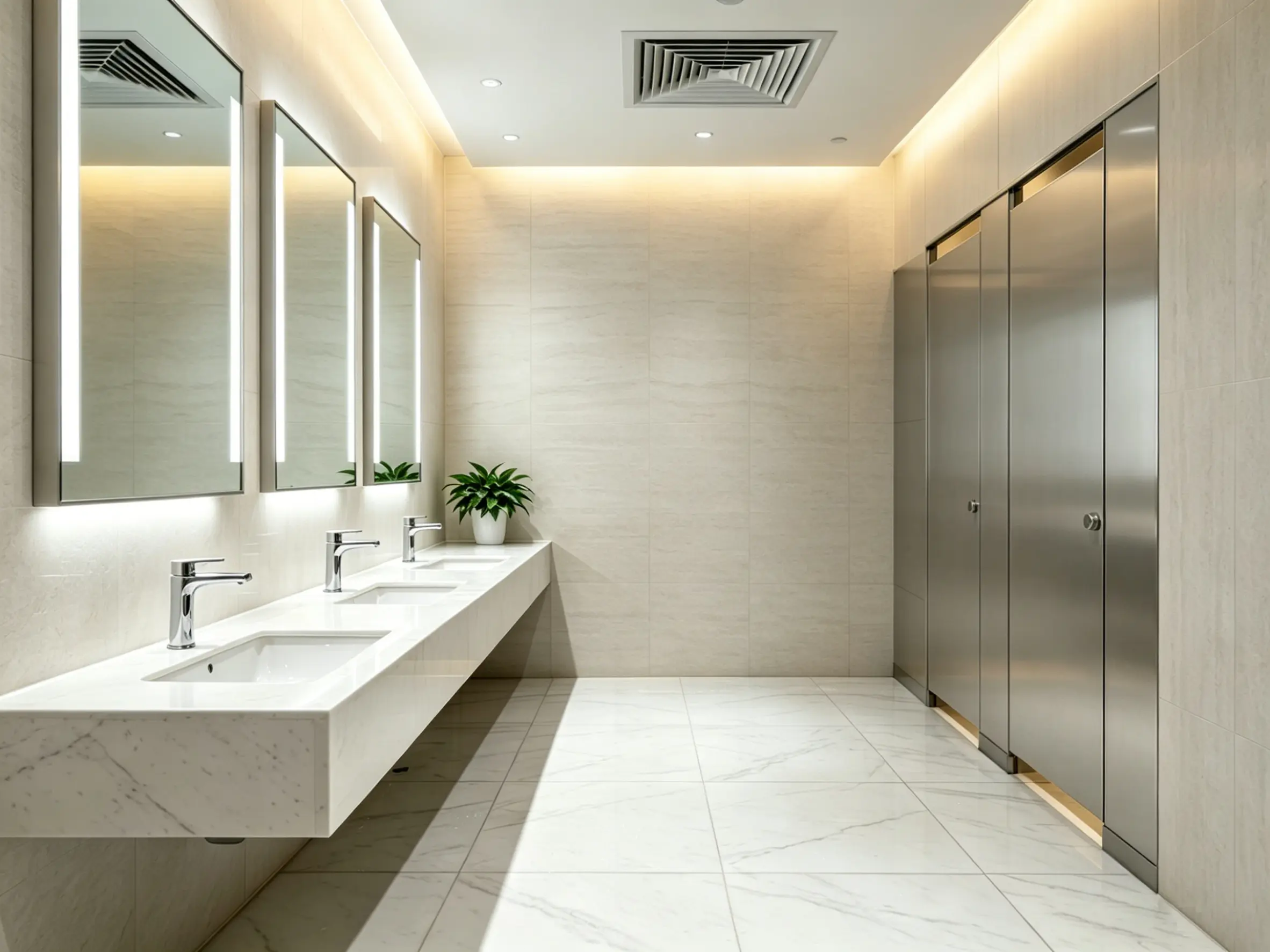
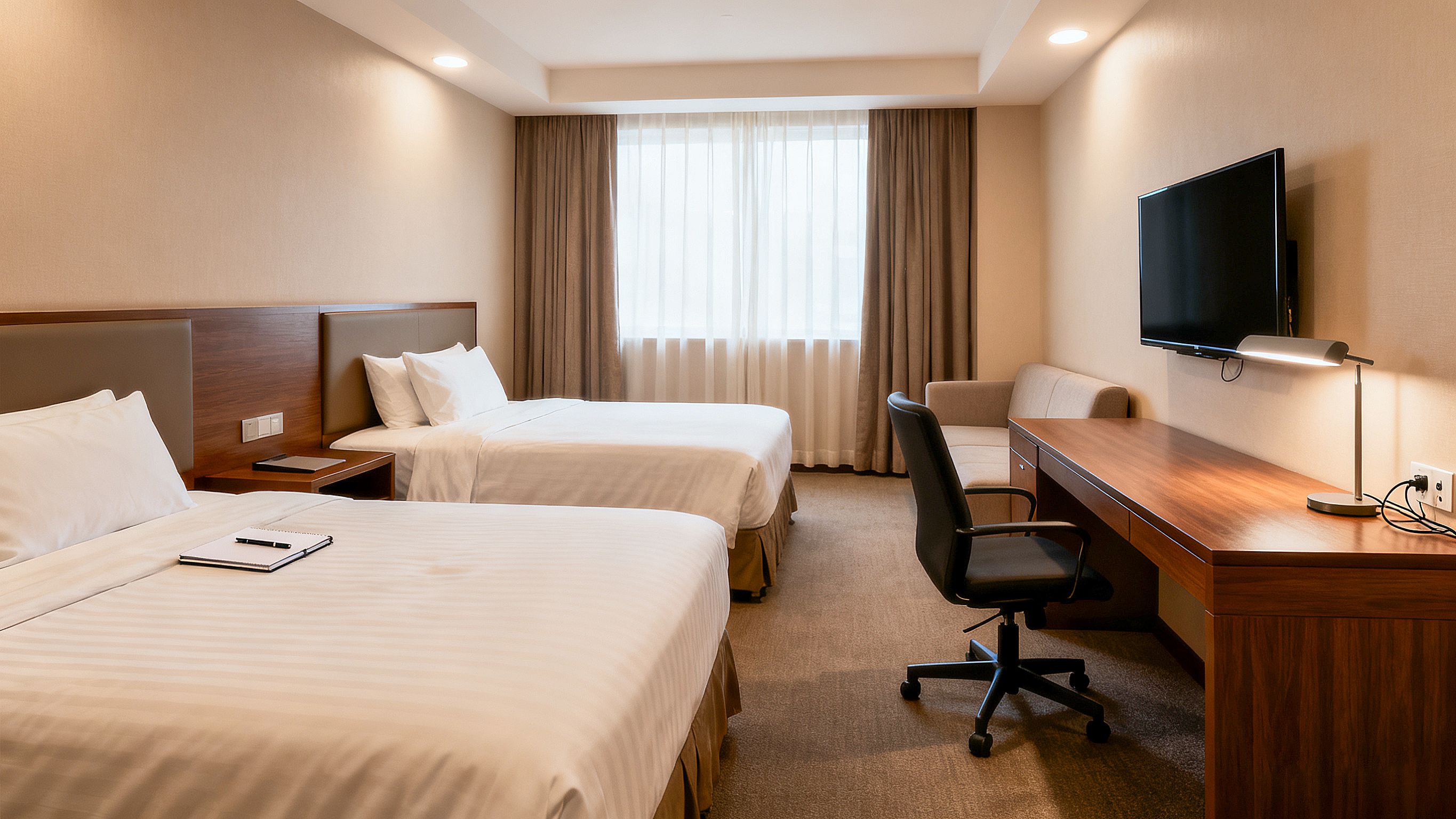
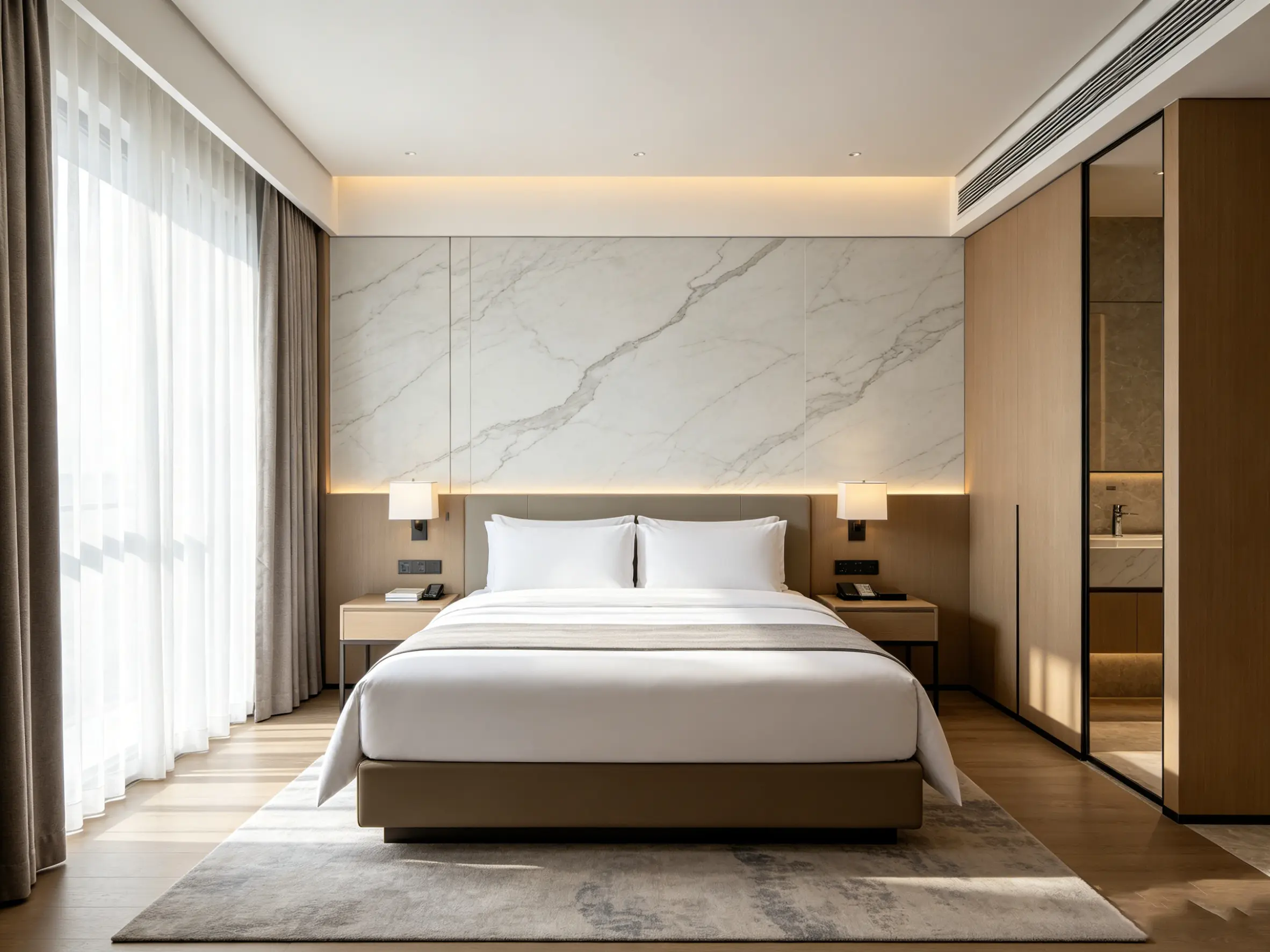
HPL Wall Panel Application Cases: Real Projects, Measurable Results & ROI Analysis in Dubai Hotel Construction
1. Featured Case Study: Hotel Renovation Project in Dubai
Project Overview
This project is a large-scale hotel renovation located in central Dubai, UAE, with a total construction area of 5,000 sqm. The project required a high-performance interior wall system capable of supporting:
- Fast-track renovation schedule
- High durability in coastal climate conditions
- Continuous hotel operation during construction
- High aesthetic consistency across guest areas and corridors
HPL Wall Panel was selected as the primary interior wall finishing solution due to its dry installation system and lifecycle cost advantages.
Construction Challenges
Dubai’s hospitality construction environment presents specific technical constraints:
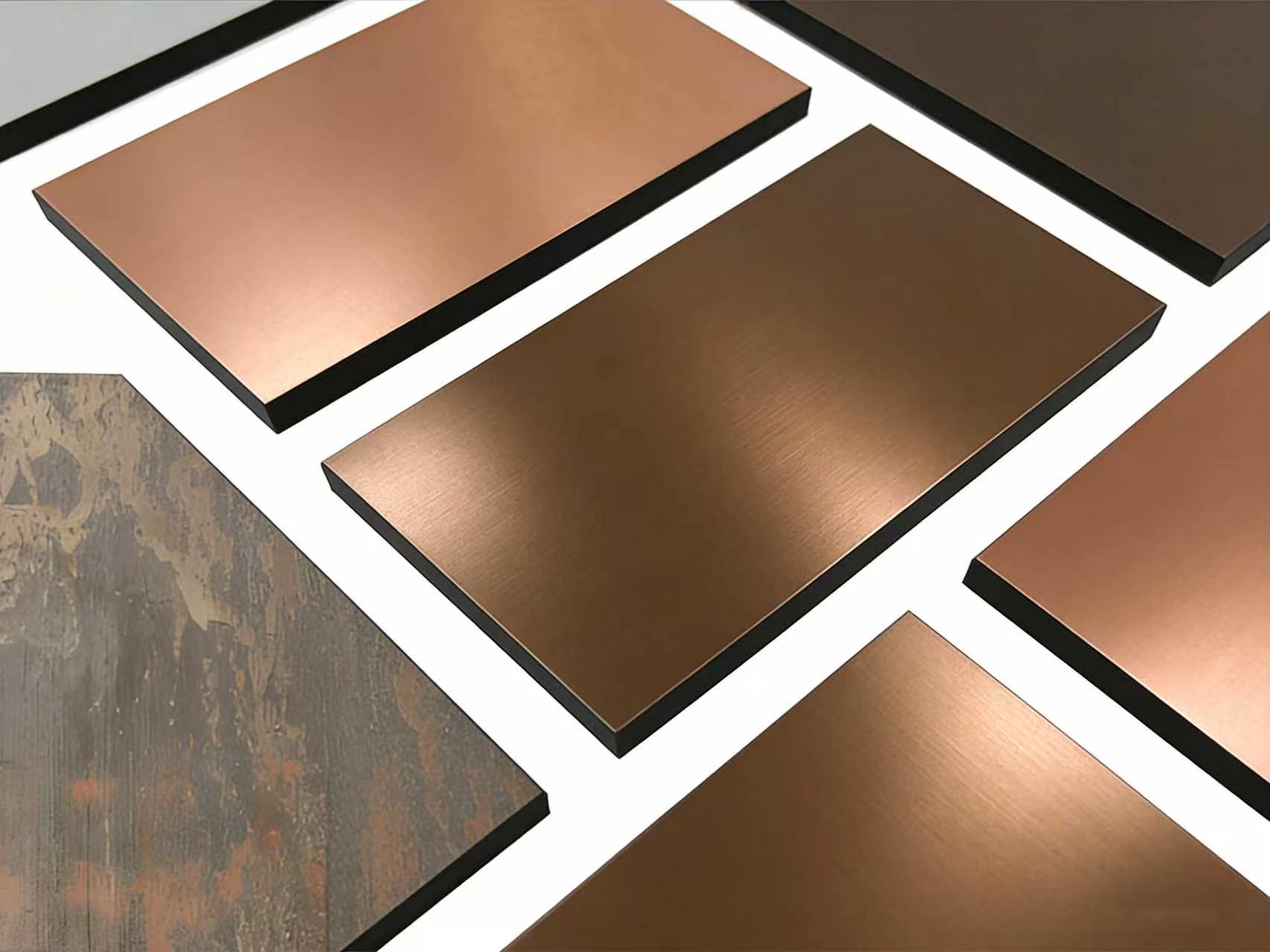
- High humidity and salt corrosion from coastal exposure
- Strict renovation timeline requirements (compressed schedule)
- High pedestrian traffic in operational hotel zones
- Complex architectural detailing (curves, corners, mixed layouts)
Traditional wall systems such as gypsum board or paint finishes could not meet both speed and durability requirements simultaneously.
Solution: HPL Wall Panel System
The project implemented High-Pressure Laminate (HPL) Wall Panel System, featuring:
- Dry installation system (no wet trade dependency)
- Prefabricated modular panel design
- High abrasion resistance surface layer
- Moisture and stain resistance coating
- Easy replacement and maintenance system
This approach significantly improved installation efficiency and long-term maintenance performance.
Project Results
- Installation time reduced by 20%
- Total coverage achieved: 5,000 sqm
- Maintenance frequency significantly reduced after installation
- Minimal disruption to hotel operations
The system enabled phased installation without shutting down key operational areas.
2. Before & After Performance Comparison
Before (Traditional Interior Wall Systems)
- Wet construction process increases installation time
- Frequent repainting and surface maintenance required
- High labor dependency
- Vulnerable to humidity-related surface damage
After (HPL Wall Panel System)
- Dry installation reduces construction time
- Improved surface durability and stain resistance
- Lower long-term maintenance frequency
- Modular replacement reduces operational disruption
Performance Comparison Table
| Cost / Performance Item | Traditional System | HPL Wall Panel | Improvement |
|---|---|---|---|
| Installation Time | High | Lower | -20% |
| Labor Requirement | High | Medium | -25% |
| Annual Maintenance Cost | High | Lower | -30% |
| 5-Year Total Cost of Ownership | High | Lower | -28% |
| Surface Durability | Medium | High | Significant |
3. ROI Calculation Framework (Featured Snippet Target)
ROI for HPL Wall Panel in commercial construction projects is calculated by comparing total lifecycle savings (labor, maintenance, downtime reduction) against total installation investment. It provides a financial decision model for developers and contractors evaluating interior wall systems in large-scale hospitality and commercial buildings.
ROI Formula
ROI = (Total Lifecycle Savings − Total Investment Cost) / Total Investment Cost × 100%
ROI Breakdown Example (5-Year Cycle)
| Cost Category | Traditional System | HPL Wall Panel | Savings |
|---|---|---|---|
| Material Cost | $85/sqm | $78/sqm | 8% |
| Installation Labor | 120 hrs | 96 hrs | 20% |
| Annual Maintenance | $18/sqm | $12/sqm | 30% |
| 5-Year Total Cost | $420/sqm | $310/sqm | 26% |
Key ROI Insight
Over a 5-year lifecycle, HPL Wall Panel delivers measurable cost reduction mainly driven by:
- Reduced maintenance cycles
- Lower labor dependency
- Faster installation speed
- Reduced operational downtime
4. Building a Business Case for HPL Wall Panel
For developers and procurement teams, the decision to adopt HPL Wall Panel should be evaluated using a structured investment framework:
① Demand Analysis
- Fast-track renovation requirements
- High-traffic durability requirements
- Operational continuity constraints
② Technical Comparison
- HPL Wall Panel vs Gypsum Board
- HPL Wall Panel vs Ceramic Tile
- HPL Wall Panel vs Solid Wood Panels
Focus metrics:
- lifecycle cost
- installation speed
- maintenance frequency
③ ROI Projection (Financial Model)
Key financial indicators:
- Payback Period: typically reduced by 1–2 years
- NPV: improved due to lower long-term maintenance
- Cash Flow Stability: reduced unexpected repair costs
④ Risk Assessment
- Moisture resistance reliability
- Supply chain stability
- Fire safety compliance
- Installation quality consistency
⑤ Recommended Application Scenarios
- Hotel interior renovation
- Shopping mall wall systems
- Commercial office interiors
- Public high-traffic buildings
5. Lessons Learned & Supplier Evaluation Criteria
Best Practices from Project Execution
- Modular prefabrication improves installation consistency
- Phased installation reduces operational disruption
- Edge sealing quality directly affects long-term durability
- Early coordination with architectural layout reduces waste
Supplier Selection Criteria
To ensure successful project delivery, suppliers should demonstrate:
- Stable manufacturing capacity for large-scale orders
- Proven hotel or commercial project references
- Strict quality control system (fire, moisture, abrasion testing)
- International logistics and project tracking capability
- Technical support for on-site installation guidance
CTA Section
Want similar results for your project? Contact our technical team for Project References, ROI Calculator, and Specialized Solutions for your next construction.
- Official Website: Official Website
- WhatsApp: +86 18923111901
- Email: mrsaluwinnie@gmail.com
Aluminum Honeycomb Panel Project Case Study: Dubai
High-Performance SPC Stone Crystal Wall Panel Installation for Hotel in Vietnam