Exploring Aluminum Honeycomb Panel: A Deep Dive into Engineering Design and Material Properties
What Are Aluminum Honeycomb Panels: Definition in Modern Systems
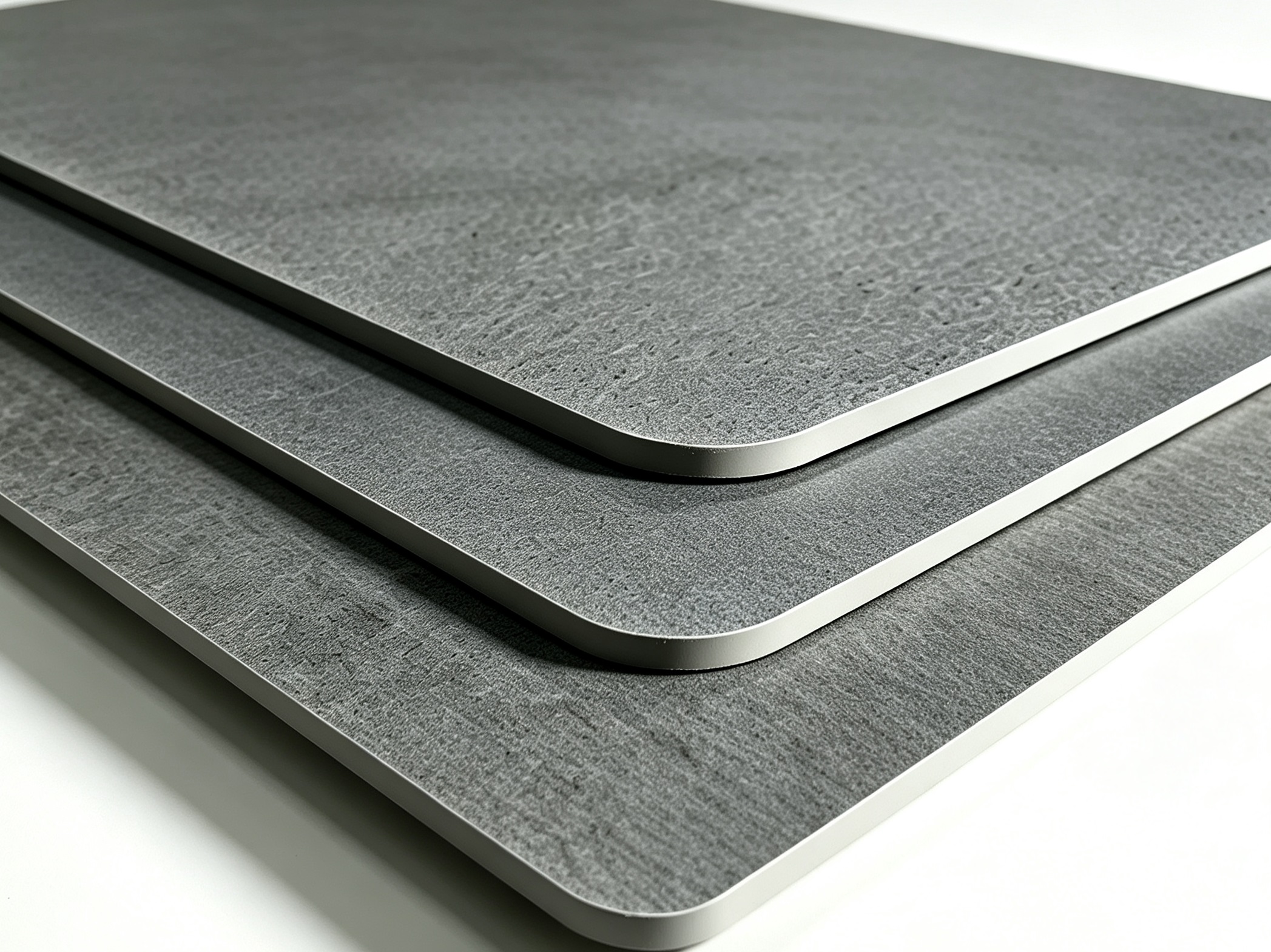
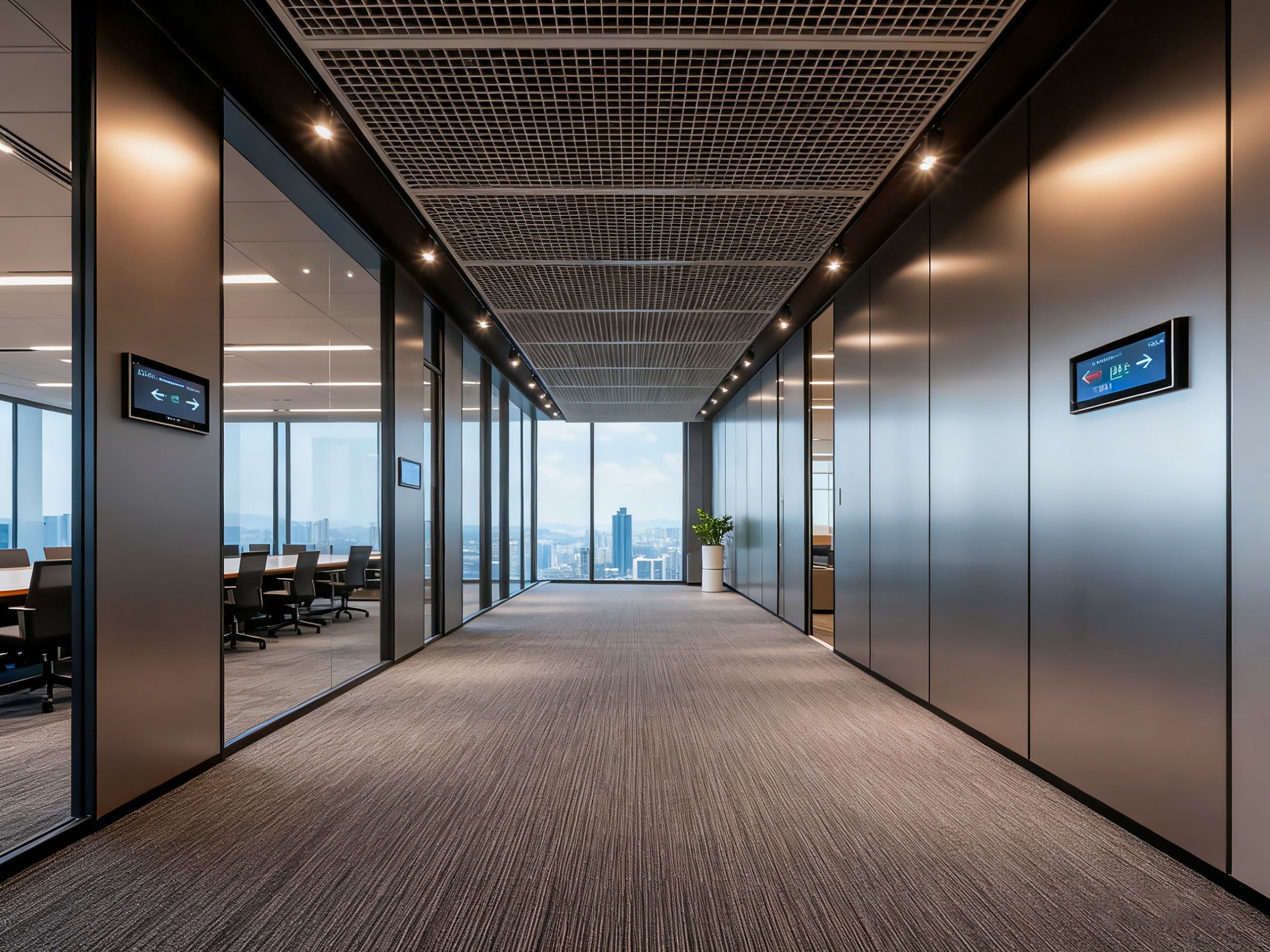
In contemporary commercial architecture, an Aluminum Honeycomb Panel is no longer viewed as a mere standalone building material; it is integrated as a high-performance exterior cladding system and premium interior decorative solution.
Architects and structural engineers are increasingly moving away from traditional substrates due to inherent material limitations. Traditional stone adds massive dead loads to building structures, wood is highly susceptible to moisture degradation and fire hazards, and standard drywall lacks the structural integrity required for large-span configurations.
The Aluminum Honeycomb Panel system directly solves these engineering bottlenecks. By fusing structural engineering principles with advanced metallurgy, it delivers an ultra-flat, high-rigidity matrix that drastically reduces structural weight while offering unmatched structural longevity in demanding environments like the Middle East.
Structural Characteristics & Material Composition
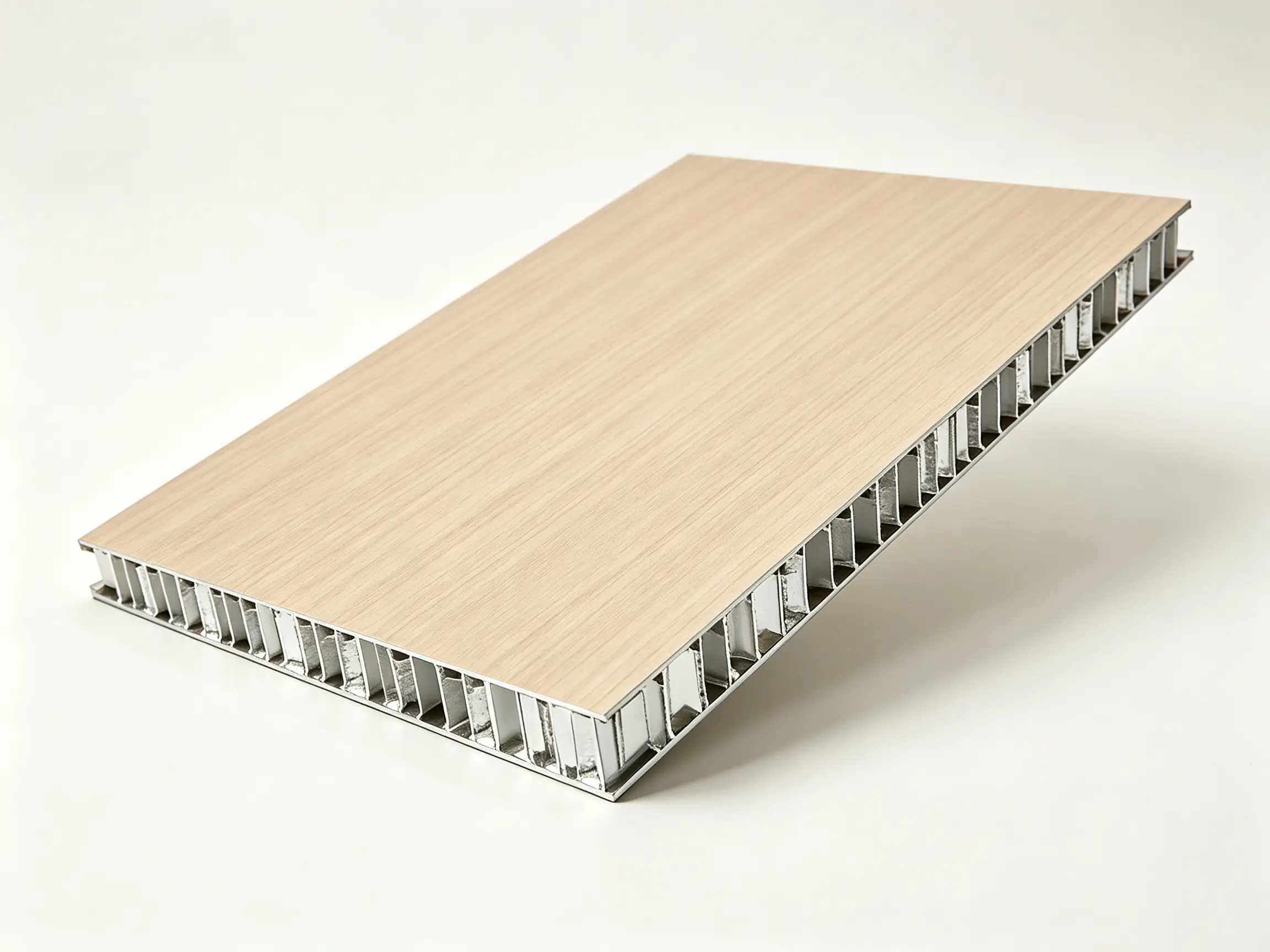
To understand the engineering value of this material, we must analyze its advanced composite structure. The panel utilizes a multi-layer biomimetic design that optimizes the strength-to-weight ratio through a distinct, layer-by-layer assembly detailed in the structural breakdown below:
| Layer Position | Component Layer | Material & Performance Specification |
| Layer 1 (Exterior Face) | Surface Treatment | High-tier PVDF / FEVE Coating (Extreme UV resistance & color retention) |
| Layer 2 | Outer Aluminum Skin | Grade 3003 H24 / 5052 H14 High-tensile strength alloy sheet |
| Layer 3 | Structural Adhesive | High-Polymer Macromolecule Film (Continuous thermal bonding) |
| Layer 4 (Core Matrix) | Honeycomb Core | Hexagonal Aluminum Foil Core (Fire-retardant biomimetic matrix) |
| Layer 5 | Structural Adhesive | High-Polymer Macromolecule Film (Continuous thermal bonding) |
| Layer 6 (Interior Face) | Inner Aluminum Skin | Protective Primer / Mill Finish (Structural back-facing backing) |
This specific geometric configuration directly dictates its performance metrics. The hollow spaces within the cells trap air, resulting in an incredibly lightweight profile that delivers exceptional tensile strength under wind-load stress, alongside natural acoustic and thermal dampening capabilities.
Technical Specifications Data
| Technical Parameter | Engineering Range / Value | Test Standard / Certification |
| Total Thickness | 6mm – 50mm (Customizable) | ASTM B209 |
| Aluminum Skin Thickness | 0.5mm – 1.0mm | EN 485-2 |
| Core Cell Size | 4.0mm – 8.0mm | Hexagonal Geometry |
| Core Density | 50 – 80 kg/m³ | High-Density Matrix |
| Fire Rating Performance | Class A2-s1, d0 | EN 13501-1 / ASTM E84 |
| Thermal Conductivity | ≤ 0.056 W/(m·K) | Structural Insulated |
💾 Engineering Resource: Download Technical Datasheet & Structural Calculations (PDF) for comprehensive project verification and compliance archiving.
Typical Applications in Large-Scale Projects
The deployment of Aluminum Honeycomb Panels targets high-tier engineering projects where performance deviations are unacceptable.
-
Hospitality Sector (Luxury Hotels & Resorts): Here, the priority is aesthetic versatility. The panel system supports massive, perfectly flat modules with custom finishes (mimicking stone or exotic metals) without the oil-canning effect common in solid sheet metals.
-
High-Traffic Infrastructure (Malls, Airports, and Metro Stations): In these environments, durability for high-traffic areas is paramount. The panels withstand severe structural vibration, daily wear, and rigorous maintenance schedules.
To ensure optimal structural behavior, these panels are integrated using engineered mechanical installation mechanisms that follow a strict sequence of load-bearing assembly:
| Installation Sequence | Structural Component | Engineering Function |
| Base Support | Wall Substructure | Main architectural load-bearing frame |
| Fixing Interface | Hidden Clips / Interlocking System | Accommodates thermal expansion & seamless alignment |
| Final Facade | Aluminum Honeycomb Panel | High-performance exterior protective envelope |
This method accommodates thermal expansion and contraction without compromising the envelope's air-tightness or water barrier integrity.
Material Advantages & B2B Efficiency
For commercial developers, main contractors, and procurement officers, the specification of this system delivers measurable financial and operational advantages over traditional alternatives:
-
Drastic Reduction in Labor Hours: Because the panels are exceptionally lightweight yet structurally rigid, large modules can be hoisted and secured with fewer onsite personnel, compressing critical-path installation schedules.
-
Minimized Installation Complexity: The engineered framing systems eliminate the need for field wet-work, heavy masonry anchoring, or extensive structural reinforcement frames.
-
Factory Direct Pricing: By bypassing middle-tier distributors, project managers secure competitive per-square-meter rates, directly lowering total material procurement costs.
-
Project-Based Customization (OEM/ODM): Panels are custom-fabricated to exact architectural shop drawings—including specialized corner transitions, pre-fabricated column covers, and custom acoustic perforations—minimizing onsite material waste.
Technical Summary & Industry Compatibility
As the global construction sector transitions toward sustainable and fast-track methodologies, the Aluminum Honeycomb Panel system excels in its compatibility with Modular Construction (pre-fabricated building systems). The panels can be easily integrated into off-site unitized curtain wall assemblies, accelerating building envelope closures.
From a lifecycle perspective, its engineered durability translates into a significantly low maintenance cost. It resists atmospheric corrosion, structural warping, and environmental degradation, securing the asset's long-term commercial value and structural integrity.
固定合作信息(CTA Section)
Need detailed technical drawings or test reports for Aluminum Honeycomb Panel? Contact our engineering team for Full Specifications and OEM Project Solutions.
-
Official Website: www.mrsalufactory.com
-
WhatsApp: +86 18923111901
-
Email: mrsaluwinnie@gmail.com
HPL Panel Technical Guide: Structure, Specifications, and Performance
SPC Stone Crystal Wall Panels Technical Guide: Structure, Specifications, and Performance